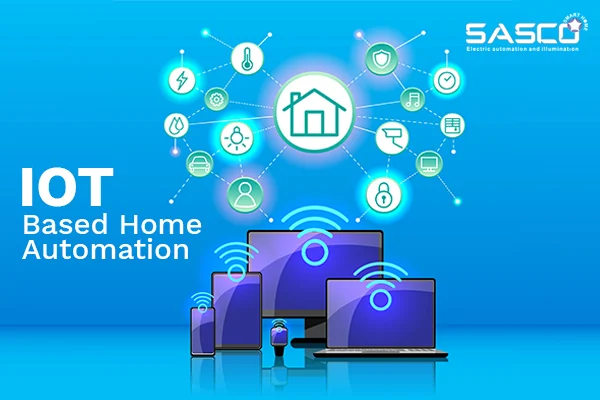
IoT based home automation has moved well past the concept stage. Today, smart home automation using IoT is how people actually manage energy, security, and comfort in modern homes — through connected devices, automated controls, and systems that respond in real time.
In 2026, the technology is more reliable, more affordable, and far easier to integrate than it was even three years ago. Whether you’re exploring it for the first time or looking to upgrade an existing setup, understanding how an IoT home automation system works — and what it takes to build one — is the right place to start.
This guide covers the full picture: how the system works, what devices are involved, and how to get started.
What is an IoT Home Automation System?
IoT means Internet of Things. The concept itself is very simple; your daily use devices like lights, ACs, lock systems, camera systems, window blinds, etc, connect to the internet, allowing you to operate them even if you are not there in the room.
IoT based home automation systems can thus be described as communication between devices in your house and with you as well. The lights dim automatically on the basis of external light intensity. Your thermostat changes temperature settings before you even reach your apartment. Your front door unlocks automatically as soon as your mobile phone gets close to it.
Though the whole thing sounds very technical, once you start using an IoT device yourself, you realize how ordinary it can become after some days’ usage.
How IoT Home Automation Works (Step-by-Step)
Step 1 — Sensors read the environment. Motion, temperature, light levels, door position — sensors collect this data continuously in the background.
Step 2 — Data travels to a hub or cloud. Your home network carries it. A hub receives it and figures out what to do next based on rules you’ve set.
Step 3 — A decision gets made. Turn on the lights. Drop the AC by two degrees. Send an alert to your phone.
Step 4 — Devices respond. The smart bulb turns on. The curtains close. The camera starts recording.
Step 5 — You stay in control. App, wall panel, or voice — you can override anything, anytime.
The complexity is in the engineering underneath. The experience for the person using it is just: things work, without much effort on your end.
Key Components of IoT Home Automation
Smart Hub — connects all devices and makes them communicate. Without it, each device works independently and nothing coordinates.
Sensors — motion, temperature, light, door and window sensors. These tell the system what’s happening in and around the home.
Connectivity layer — Wi-Fi, Zigbee, Z-Wave, or KNX depending on the system. This is what carries signals between devices.
Control interface — a touchscreen wall panel, a smartphone app, or a voice assistant. Whatever feels most natural to use.
Actuators — devices that physically act on commands. Smart switches, motorized blinds, smart locks, HVAC units. These are the end point of every automation.
Each piece depends on the others. Take one out and the chain breaks somewhere.
IoT Devices for Home Automation
The range of IoT devices for home automation has expanded considerably. Here’s what most setups include:
Smart lighting — bulbs and switches that dim, schedule, or respond to motion. Usually the easiest place to start.
Smart thermostats and HVAC controls — temperature adjusts based on who’s home and when. Electricity bills tend to reflect this within a month or two.
Smart locks and video doorbells — see and speak to whoever’s at the door, unlock remotely, get alerts when something unusual happens.
Smart plugs and switches — makes any regular appliance remotely controllable without replacing the appliance itself.
Security cameras — live feeds, motion-triggered recording, and cloud storage. Works alongside the rest of the system.
Audio-visual systems — multi-room audio, motorized screens, smart projectors. The entertainment layer of home automation using IoT.
For professional setups, companies like SASCO Smart Homes work with brands like ABB, KNX, and Control4. The gap between consumer-grade smart plugs and a professionally integrated system is significant — in reliability, how deeply everything connects, and how it behaves as one system rather than a handful of separate apps.
Benefits of Smart Home Automation Using IoT
Convenience. Control your home from wherever you are — same building or different city. Less time spent managing things manually.
Energy efficiency. Lights off in empty rooms. HVAC only runs when it needs to. These savings are real and they compound over months.
Security. Alerts when doors open unexpectedly. Camera access from your phone. Smart locks that log every entry and exit.
Comfort. Lighting that adjusts through the day. The temperature is already set right when your alarm goes off. Small differences, but you notice them quickly.
Property value. A professionally installed smart home automation using IoT genuinely adds to what a property is worth — particularly in the premium residential segment where buyers expect it.
Most people who make the switch say the benefits showed up faster than they anticipated.
IoT Home Automation Project (Basic Setup Guide)
Want to experience it before committing to a full system? Here’s a simple IoT home automation project you can start this weekend:
Smart lighting first. Buy two or three smart bulbs or one smart switch. Connect them to Wi-Fi. Set a schedule or a scene.
Add a smart plug. Pick an appliance you frequently forget to turn off. Monitor its usage. Set it to cut off automatically at a fixed time.
Connect to a voice assistant. Link your devices to Google Home or Alexa. Voice control is genuinely useful once you get used to it.
Build one automation rule. When your phone leaves home, turn off all lights. Most apps support this with location triggers.
That’s a working IoT home automation project. It’s enough to understand how the system feels before deciding whether to invest in something more comprehensive. For a fully integrated setup — lighting, HVAC, security, AV all working together — that’s where a professional partner like SASCO Smart Homes becomes relevant.
Conclusion
IoT based home automation isn’t complicated once you see how the pieces fit together. And it’s not out of reach in 2026 — whether you start with one smart switch or build out an entire system.
The core idea stays the same at every scale: your home responds to you, instead of waiting for you to manage it.
For professionally designed and installed IoT home automation systems across residential and commercial projects, SASCO Smart Homes is worth a look. More at sascosmarthome.com.