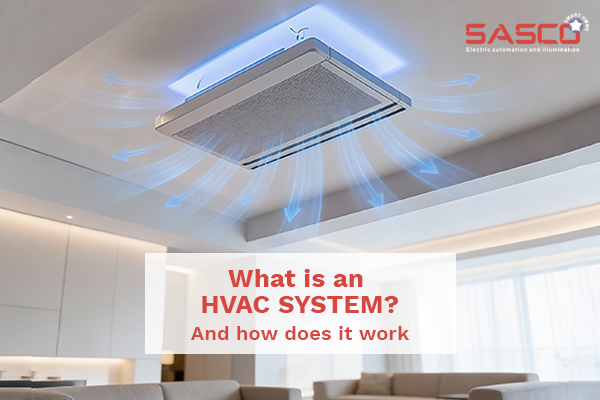
Walk into any office, mall, or apartment building these days and you’ll notice one thing – perfectly controlled climate. Not too hot, not too cold, the air feels fresh. That’s the HVAC system doing its thing. These systems are literally everywhere now.
Today, most people using HVAC systems daily couldn’t really explain what it does or how it’s different from a regular AC or heater. Ever found yourself wondering about that?
‘What is the meaning of HVAC?’ ‘How does this system work?’ If these questions have crossed your mind, you’re definitely not alone. Let’s dig into this technology that quietly runs our modern indoor spaces.
What is an HVAC System?
HVAC systems are referred to as heating, ventilation, and air conditioning. Its work is to simply control your home’s indoor temperature, humidity, and air quality. So to answer your simple question, “What is an HVAC?” it is the combination of ventilation, air conditioners, boilers, and furnaces.
Together, these systems control humidity and temperature while protecting the air from allergens and pollutants. In order to create a safe and comfortable indoor environment, HVAC systems are essential to you and your family. These HVAC systems can work anywhere in homes, offices, hospitals, schools, and specialized spaces-all in the interest of comfort.
A characteristic of these systems includes the intake of fresh air from the outdoors which brings in high-quality air into the indoor spaces. Ventilation is an integral part of HVAC. It is the process of renewing or recirculating air in a space. The effects also go beyond temperature regulation: dust, moisture, odors, smoke, and all forms of airborne germs are removed. By equalizing temperature and purifying air, HVAC significantly improves indoor air quality.
How Does an HVAC System Work?
The operating principle of the HVAC system includes the intake of fresh air from the surroundings, which then goes through the cooling or heating process and is circulated into indoor spaces. This could be a single room or the entire building.
A comprehensive HVAC installation consists of one heating unit and one cooling unit, supplemented by a duct system to deliver the conditioned air. Each unit operates as follows :
The Heating Unit
The most commonly used central component is the furnace for heating. For furnaces, the efficiency rating is given by a number known as the ‘Annual Fuel Utilization Efficiency (AFUE)’. This number basically reflects the proportion of fuel converted into heat whether the fuel is natural gas, electricity, or propane.
A 95% AFUE-rated furnace converts 95% of the fuel it consumes to heat. The minimum required AFUE rating is 80%. HVAC systems use the processes of conduction, convection, and radiation for heating, through such equipment as boilers and heat pumps.
The Cooling Unit
Systems involved in HVAC include a cooling unit, usually an air conditioner. If the outside temperature rarely reaches below freezing temperatures, then a heat pump can both cool and warm air. The SEER value refers to the seasonal energy efficiency ratio, and it measures how effectively the system cools.
To achieve the best energy efficiency, you will need to have a SEER rating for the cooling unit. The most efficient units have ratings in the neighborhood of 20 or above, though minimum-rated units are rated at 13.
Cooling includes air conditioners, chillers, and cooling towers that serve to maintain temperature levels in closed areas, with water sometimes replacing coolant to bring down the temperature, while air filtration with humidity regulation is also a common feature.
Ventilation in HVAC Systems
Ventilation keeps the air circulating steadily and clean. It also works with heating and cooling systems to provide the proper temperature within the building. Ventilation keeps the air quality by pulling in fresh air from outdoors. Several systems also involve humidifiers or dehumidifiers to keep the moisture level of the air in check, as well as air purifiers to remove minute particles such as germs and viruses.
Types of HVAC Systems
The various HVAC systems differ due to the cooling or heating requirements of a space, the existing ductwork, location, and the age of a building. Main types of HVAC system available:
Split Systems: This is the most common type, comprising an indoor unit with the evaporator coil and blower, and an outdoor unit housing the compressor and condenser coil. These systems are versatile and can be used for both heating and cooling.
Packaged Systems: These systems are relatively compact and generally used on smaller structures, often rooftop or attic installations, or installations near the base of a building. They contain both heating and cooling components in one unit.
Ductless mini-split systems: These are air conditioning or heating systems that do not require ducts. They employ an outside compressor unit and interior air-handling units for greater flexibility, and they are much more energy-efficient.
Hybrid systems: These may burn gas or switch to electric power. Although electric heating may be slower, it affords a better level of control over energy consumption.
How to Choose the Right HVAC System?
Following are some of the main factors to be considered in the selection of an HVAC system:
Building size: Knowledge of the square footage and layout of the building helps find the needs that exist for heating and cooling. This allows for a selection that is neither too large nor too small for an HVAC system.
Climate: Consider the usual temperatures, the general humidity levels of the area concerned, and the severity of weather conditions.
Energy Efficiency Ratings: Choose an HVAC system with a good efficiency rating. Look for certifications indicating that the product has met environmental standards. This reduces energy bills in the long run.
How Is an HVAC System Different from an Air Conditioner?
While HVAC systems may be installed for heating and cooling purposes, air conditioning is only a single component of a HVAC system, which offers cooling alone. HVAC systems can control temperature, humidity, as well as the quality of air inside confined spaces. Air conditioners require a refrigerant in order to cool through evaporation and thus bring down the temperature and absorb humidity from the air.
Whereas Air conditioning employs refrigerants to control temperature and humidity alone, a HVAC system makes use of heating, cooling, and ventilation mechanisms so as to keep evaporative temperature, humidity, and air quality under control.
Conclusion
Choosing the right HVAC system needs some homework. What you’re trying to achieve, your climate, costs, efficiencies – these factors all matter as we’ve covered.
Feeling overwhelmed trying to find the right HVAC system? That’s where Sasco Smart Homes comes in. We give you tools making informed choices easier. Professional assistance, extensive inventory of HVAC systems for homes and businesses – we’ve got you covered.
What we really want? You having the best experience possible with optimal air conditions. Comfortable temperatures, above-average efficiency, quality indoor air – that’s what good HVAC delivers.
Questions about HVAC? Curious how the right system transforms your indoor environment? Reach out to Sasco Smart Homes for a consultation today. Let’s figure out what works best for your space!
Read More – Smart Keypads, Architectural Lighting, home automation india