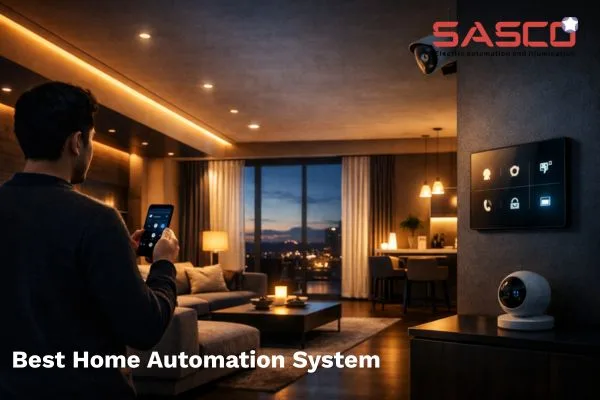
What is a Smart Home Automation System?
A smart home automation system connects your home’s devices and lets you control them from anywhere. Lights. Climate. Security. Entertainment. All responding to your commands through smartphones, voice, or automated schedules.
Think of it as your home’s nervous system. Sensors detect what’s happening. Controllers make decisions. Devices execute actions. Everything communicates. Everything works together.
Traditional homes require manual control. Walk to light switches. Adjust thermostats by hand. Check door locks physically. Constant interaction for basic functions.
Smart home automation eliminates that. Lights turn on when you enter rooms. AC adjusts based on weather. Curtains close at sunset. Doors lock when you leave. Your home anticipates needs and handles them automatically.
The best home automation system isn’t about technology showing off. It’s about invisible convenience. Your home just works. Perfectly. Every time.
Key Features of a Smart Home System
What makes a smart home system actually smart? These core features separate real automation from glorified remote controls.
Centralized Control – Everything managed from one interface. Smartphone app. Wall-mounted touchscreen. Voice assistant. One place controlling lights, climate, security, entertainment.
Remote Access – Control your home from anywhere. Turn on AC before you arrive home. Check security cameras while traveling. Unlock doors for guests remotely.
Automation & Scheduling – Devices operate automatically based on schedules or triggers. Lights dim at 9 PM. Heating starts before you wake. Your home runs on autopilot.
Voice Control – “Alexa, turn off all lights.” “Google, set temperature to 22 degrees.” Natural voice commands controlling everything. No buttons. No apps. Just talk.
Scene Creation – Single commands triggering multiple actions. “Movie Mode” dims lights, closes curtains, turns on TV. “Good Morning” opens curtains, starts coffee, plays news.
Energy Monitoring – Track power consumption. Identify energy waste. Optimize usage automatically. Lower electricity bills through intelligent management.
Security Integration – Cameras. Smart locks. Motion sensors. Integrated alarms. Complete protection managed through one system.
Scalability – Start small. Add devices over time. The system grows with your needs.
Benefits of Home Automation
Why are homeowners worldwide adopting smart home automation systems? Because the benefits are undeniable.
Convenience – Control everything from your phone. Automate daily routines. No more walking around adjusting things.
Energy Savings – Lights turn off in empty rooms. AC doesn’t waste energy when nobody’s home. Monthly electricity bills drop 20-30%. Savings compound year after year.
Enhanced Security – Real-time alerts when doors open. Video monitoring from anywhere. Smart locks preventing unauthorized access. Peace of mind knowing your home is protected.
Comfort – Perfect temperature always. Optimal lighting for every activity. Entertainment systems that work effortlessly. Your home adapts to preferences automatically.
Time Savings – Automation handles routine tasks. No manually adjusting thermostats daily. No checking if doors are locked. Hours saved monthly.
Home Value – Smart homes command premium prices. Tech-savvy buyers pay more. Your investment increases property value while you enjoy benefits.
Remote Monitoring – Check on kids after school. Monitor elderly parents remotely. Stay connected to what matters.
Voice Control Setup Guide: Rooms, Routines and Privacy Settings
Types of Smart Home Automation Systems
Different systems serve different needs. Understanding types helps you choose right.
Wired Systems – Cables connect all devices. Most reliable. Fastest response. Best for new construction. Once installed, rock-solid performance.
Wireless Systems – Devices communicate via WiFi, Zigbee, or Z-Wave. Easier installation. No wall cutting. Perfect for existing homes. Flexibility to add devices easily.
Hybrid Systems – Combines wired and wireless. Critical devices wired for reliability. Accessories wireless for convenience. Best of both worlds.
Professional Systems – Designed and installed by experts. Fully integrated. Custom programmed. Comprehensive support. Higher upfront cost. Superior performance.
DIY Systems – Self-installed smart devices. Lower cost. Limited integration. Works for basic automation. Not truly centralized control.
Home Automation Cost in India
What does smart home automation actually cost? Depends on scope and quality.
Basic Systems – ₹50,000 to ₹1,50,000. Covers lighting control, basic climate management, single-room automation. Good starting point for small apartments.
Mid-Range Systems – ₹2,00,000 to ₹5,00,000. Whole-home lighting. Complete climate control. Security integration. Entertainment automation. Most popular choice for urban homes.
Premium Systems – ₹5,00,000 to ₹15,00,000+. Comprehensive automation. High-end devices. Advanced features. Multi-zone audio/video. Complete security. For luxury homes and villas.
Factors Affecting Home Automation Cost:
Home size. Larger homes need more devices. Device quality. Premium brands cost more. Features included. Basic lighting is cheap. Add climate, security, entertainment, and costs climb. Wired vs wireless. Wired systems cost more to install. Professional vs DIY. Professional installation adds cost but ensures proper setup.
Most homeowners in India spend ₹2-4 lakhs for comprehensive automation of 2-3 BHK homes. The investment pays back through energy savings, convenience, and property value increase.
Smart Hotel Automation: Improve Guest Experience & Profits
How to Choose the Best Home Automation System?
With countless options available, how do you pick the best home automation system for your needs?
Assess Your Needs – What do you want automated? Lighting only? Full home? List priorities. Be specific. Needs determine which system fits.
Set a Realistic Budget – Know what you can spend. Home automation cost varies widely. Budget guides options. Don’t overspend on features you won’t use.
Consider Future Expansion – Choose scalable systems. Start small if budget is tight. Add devices later. System should grow with needs.
Check Compatibility – Ensure devices work together. Integration matters. Unified control requires compatible devices.
Evaluate Reliability – Read reviews. Ask for references. Check track record. Reliable systems prevent frustration.
Assess User Interface – Try the control app. Is it intuitive? Simple interfaces get used. Complicated ones frustrate.
Verify Support & Service – What happens when things break? Is support responsive? Local service matters.
Professional vs DIY – DIY saves money upfront. Professional installation ensures proper integration. Complex systems need professional setup.
Energy Efficiency Features – Does the system actively save energy? Automation should reduce bills.
Security & Privacy – How is data handled? Security matters when devices control your home.
Brand Reputation – Established brands offer better support and longevity. Unknown brands may disappear.
Test Before Committing – If possible, demo the system. Experience it firsthand.
READ MORE- Audio visual solution , Smart HVAC , Architectural lighting
Conclusion
Smart home automation isn’t future technology. It’s today’s reality. Homes worldwide are getting smarter. India is catching up fast.
The smart home automation system you install today determines your comfort, convenience, and costs for years. Right choice makes life easier while saving money. Wrong choice creates frustration.
Home automation cost in India has dropped significantly. Technology has matured. Installation is faster. Reliability is proven. The barriers that once made automation expensive have disappeared.
Benefits are clear. Convenience. Energy savings. Security. Comfort. All measurable. All achievable. All worth the investment.
At Sasco Smart Homes, we specialize in smart home systems tailored to Indian homes and lifestyles. We understand local needs, climate challenges, and budget realities. We deliver automation that works reliably and scales with requirements.
We handle everything—design, installation, programming, support. We use proven technology from trusted brands. We ensure systems integrate seamlessly.
Your home should work for you. Smart home automation makes that happen. The question isn’t whether to automate. It’s how soon you start enjoying the benefits.
What devices can be controlled in a smart home?
Smart homes can control lights, air conditioning, fans, curtains, security cameras, door locks, TVs, music systems, and other connected appliances.
How much does home automation cost in India?
Home automation in India usually costs between ₹50,000 and ₹5,00,000 or more, depending on home size, devices used, and the level of automation you want.
Can smart home automation help save electricity?
Yes. Smart systems can turn off lights in empty rooms, adjust temperature automatically, and monitor energy use, which helps reduce electricity consumption.
Is smart home automation suitable for existing homes?
Yes. Many wireless automation systems can be installed in existing homes without major construction or rewiring, making upgrades simple and convenient.