Ten years ago, a home that turned off its own lights or unlocked the front door from your phone felt like something out of a film set. Walk into a mid-range apartment project in Delhi or Bengaluru today and it’s a standard sales pitch. A smart home automation system has moved from a lifestyle statement to a practical decision — and one that more Indian homeowners are factoring into builds and renovations long before the interior designer shows up.
This guide covers everything worth knowing: how these systems actually work, what you can install, what it costs, and what to get right before you commit.
What Is a Smart Home Automation System?
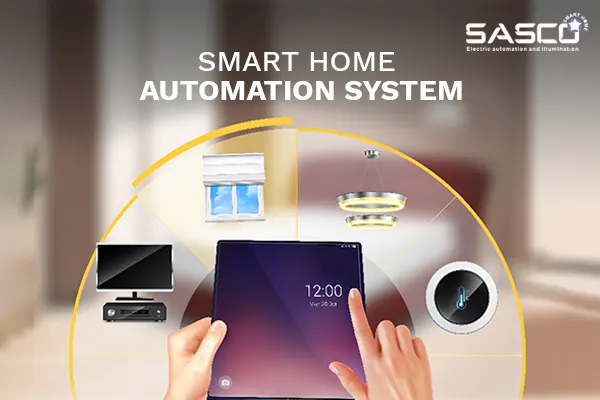
At its core, a smart home automation system is a network of connected devices — lights, locks, thermostats, cameras, curtains, speakers — that talk to each other and respond to a single point of control. That control point is usually a phone app, a wall-mounted panel, a voice assistant, or some combination of all three.
The logic behind it is simpler than it sounds. When you leave for work, instead of walking through every room checking switches, a single “goodbye” scene locks the doors, cuts the lights, adjusts the AC, and arms the cameras. You set that scene up once. The system handles it every time.
This is the practical expression of IoT smart homes — the Internet of Things applied to residential spaces, where each device has sensors and connectivity built in and responds to the rules you define.
Benefits of Smart Home Automation for Modern Homes
The obvious benefit is convenience. Being able to control every system in your home from one place — or just your voice — removes a lot of small friction from daily life. But that’s not really where the value proposition sits.
The more compelling case is energy efficiency. Lights that cut off when no one’s in a room, ACs that ease back based on occupancy rather than running full blast until someone manually adjusts them, appliances on off-peak schedules — these reduce electricity bills in ways that compound month over month. In a country where cooling can run six to eight months a year, that’s not trivial.
Security is what drives a lot of the buying decisions in urban India. Real-time camera access, access logs on smart locks, motion-triggered alerts sent to your phone — homeowners get a level of visibility they simply didn’t have before. And unlike traditional CCTV, smart home solutions put all of that into one interface rather than a separate app for every device.
Comfort is harder to put a number on but easy to notice. A home that warms its lighting in the evening, pre-cools the bedroom before you sleep, and plays music when you walk in feels different to live in. That’s not marketing — it’s what good automation actually does.
Properties with smart home solutions installed also hold their value better. In most urban markets, the premium for automated homes is real and it’s growing.
Types of Smart Home Automation Systems
Wireless Smart Home Automation
Wireless systems run on Wi-Fi, Zigbee, Z-Wave, or Bluetooth. No new wiring is needed beyond what’s already in the walls, which makes them the practical choice for retrofitting a completed apartment or home. Setup is faster, costs are lower upfront, and there’s far less disruption to the space.
The honest tradeoff is reliability. Performance depends on network quality, battery-operated devices need attention, and signal range can be a problem in larger spaces. For apartments and smaller homes, wireless usually makes sense. For anything bigger, it’s worth thinking harder.
Wired Smart Home Automation
Wired systems use dedicated cables — KNX, DALI, C-Bus — running through the structure itself. They’re faster to respond, don’t care about Wi-Fi, and don’t have battery limitations. The catch is that smart home installation needs to happen during construction or a significant renovation. You can’t retrofit a properly wired system without opening walls.
For villas and large homes, this is the professional standard. The added cost is real. So is the performance difference over decades of daily use.
Hybrid Smart Home Automation Systems
Hybrid systems use a wired backbone for core functions — lighting, climate, security — and wireless for devices that can be added or moved later. For anyone building new, this is increasingly the architecture worth specifying from the start. It gives you a solid foundation without locking you out of future flexibility.
Popular Smart Home Solutions You Can Install
Smart Lighting Automation
Smart lighting automation is much more than a dimmer. Scenes can be programmed — “Morning,” “Movie Night,” “Away” — each adjusting every light in the house at once. Sensors handle the routine switching automatically based on occupancy or time. Colour temperature shifts through the day, which genuinely changes how a room feels by evening.
For homes with architectural lighting — coves, accent strips, feature walls — smart control makes the design functional rather than something that looks good in photos and gets ignored in daily life.
Smart Security Systems
Cameras, video doorbells, smart locks, motion sensors, and alarm panels integrated into one platform. No switching between four apps — everything in one place. Access logs show who came and went and when. Temporary codes for housekeeping or delivery staff can be set to expire automatically. Motion alerts arrive on your phone with a snapshot.
For families, for frequent travellers, for anyone managing a property remotely — this kind of visibility changes what “feeling secure” actually means.
Smart Climate Control
Zone-by-zone AC control, occupancy-based scheduling, real-time energy monitoring. A smart climate system can detect an open window and pause cooling. It can pre-cool a room before your usual arrival time without you thinking about it. In India’s climate, smart HVAC has one of the faster payback periods of any home automation feature — the savings show up on the electricity bill quickly enough to notice.
Smart Entertainment Systems
Multi-room audio and home theatre brought into the same interface as everything else. Music follows you from the kitchen through the house. Selecting “Cinema mode” drops the screen, dims the lights, and brings up the sound system without touching three separate remotes. SASCO integrates brands like Denon, Marantz, KEF, and Yamaha into unified smart home solutions that actually work as a system rather than a collection of expensive individual products.
Smart Curtain & Blind Automation
Motorised curtains and blinds are underappreciated as a smart home solution, but they earn their place quickly. Scheduled to open at sunrise, close when afternoon sun hits certain windows, or trigger as part of a privacy scene — motorised control becomes genuinely useful rather than a gimmick. For homes with floor-to-ceiling glazing or large windows, it’s as much a practical necessity as a convenience.
Smart Home Automation for Different Types of Homes
Smart Home Automation for Apartments
Wireless is usually the right call for apartments — no structural changes, faster installation, easier to move if you shift homes. The focus is typically on lighting scenes, smart security at the entrance, and climate scheduling. Even a modest setup changes how an apartment feels to live in day to day.
Smart Home Automation for Villas
Villas justify a more comprehensive setup — wired or hybrid, covering the full property. Perimeter security, multi-zone climate, garden lighting, pool automation, integrated AV across multiple rooms, centralised control. The investment is proportionally higher, but a well-designed villa system adds real comfort and meaningful long-term value.
Smart Home Automation for Luxury Homes
This is where a smart home automation system becomes a design project in its own right. KNX-based wired infrastructure, architectural lighting programmed by specialists, dedicated home theatre, biometric access, scenes that coordinate dozens of devices simultaneously — none of this is off the shelf. It’s designed, installed, and commissioned specifically for the space. SASCO Smart Homes works at this level, handling everything from initial design through to final programming on luxury home automation projects across Delhi and NCR.
How Much Does a Smart Home Automation System Cost in India?
Home automation India pricing depends heavily on scope, technology choice, and brand specification. These are approximate installed costs — hardware, cabling, configuration, and commissioning included:
| Setup Type | Home Size | Approx. Cost |
| Basic (Lighting + Security + Climate) | 2BHK Apartment | ₹1.5 – ₹3 Lakhs |
| Mid-range (Wireless whole-home) | 3–4BHK Home | ₹4 – ₹10 Lakhs |
| Premium (Wired/Hybrid, Full integration) | Villa or Large Home | ₹15 – ₹40 Lakhs |
| Luxury (KNX, Custom AV, Full design) | Luxury Bungalow/Penthouse | ₹40 Lakhs and above |
Ongoing costs vary by platform — some require annual subscription fees, most professional systems include a maintenance contract. Worth asking about upfront.
Things to Consider Before Installing Smart Home Automation
If you’re building, the best time to plan is now — before walls are closed. Wired systems cost significantly less to install during construction than they do as a retrofit. Getting smart home planning into the electrical drawings early changes what’s possible and what it costs.
Protocol choice matters more than most people realise. KNX, Zigbee, and Z-Wave have long track records and broad product support. Proprietary systems that depend entirely on one company’s cloud can become unsupported in five years. Before committing, ask your integrator what happens to the system if the platform vendor shuts down or changes their pricing model.
Think about scenes before you think about devices. The real value of a smart home automation system comes from orchestration — devices working together in response to one trigger. Design the scenes you want to live with first, then let those drive the hardware decisions.
Network quality is foundational for wireless setups. Dead zones in your current Wi-Fi coverage need to be fixed before automation hardware goes in, not after. And plan for expansion — your needs will change, and a well-designed system should accommodate new devices without replacing what’s already there.
Why Choose Professional Smart Home Solutions?
Consumer smart devices look appealing on price. The reality of mixing five different brands from five different ecosystems is that something always doesn’t quite work, there’s no single person to call when it doesn’t, and troubleshooting it yourself is how evenings disappear.
Professional smart home solutions are different in approach. Everything is chosen to integrate with everything else. The system is programmed to the specific home — its layout, how the family uses each space, what they actually want to automate. When something needs adjusting, there’s a team that built it and knows exactly how it was configured.
SASCO Smart Homes, based in Pitampura, New Delhi, designs and installs smart home automation systems across apartment, villa, and luxury residential categories. Their work covers architectural lighting, home automation, audio-visual integration, and smart HVAC — built as one coordinated system, not a collection of individual products bolted together. For homeowners who want a system that works reliably and keeps working, professional installation is usually the only path that delivers that.
Future of Smart Home Automation
Where smart home technology is heading is toward systems that need less management, not more. AI-driven automation that learns occupancy patterns and adjusts settings without being explicitly programmed is already available in high-end installations. It’s not a concept — it’s something SASCO and similar integrators are implementing now.
Energy integration is the next practical frontier. Systems that communicate with rooftop solar, battery storage, and grid pricing — shifting loads automatically to cheaper hours or drawing from stored power — are commercially available and will become mainstream in India faster than most people expect.
The homes being built and renovated today will carry this infrastructure for 30 to 50 years. Getting the wiring, protocols, and system architecture right at the start is one of the decisions that will look either very smart or very expensive to redo, depending on how it’s handled.
Conclusion
An automation system isn’t a product you buy — it’s a set of decisions about how your home’s systems work together, who controls them, and what happens when something needs changing. Getting those decisions right at the start matters more than any individual gadget.
For homeowners exploring smart home solutions in India, the clearest next step is a proper consultation — someone who can look at the actual space, understand how you live in it, and design accordingly.
FAQ
A smart home automation system connects devices like lights, ACs, and locks, allowing centralized control through apps, voice assistants, or automation scenes.
It improves convenience, enhances security, reduces energy consumption, and increases property value, especially in modern urban homes.
Wireless suits apartments and retrofits. Wired systems offer better reliability and are ideal for villas or new construction projects.
Basic setups start around ₹1.5–₹3 lakhs, while advanced or luxury smart home solutions can exceed ₹40 lakhs depending on scale.
Yes, most systems are scalable. You can start small and expand features like lighting, security, and climate control over time.